
 EN
EN



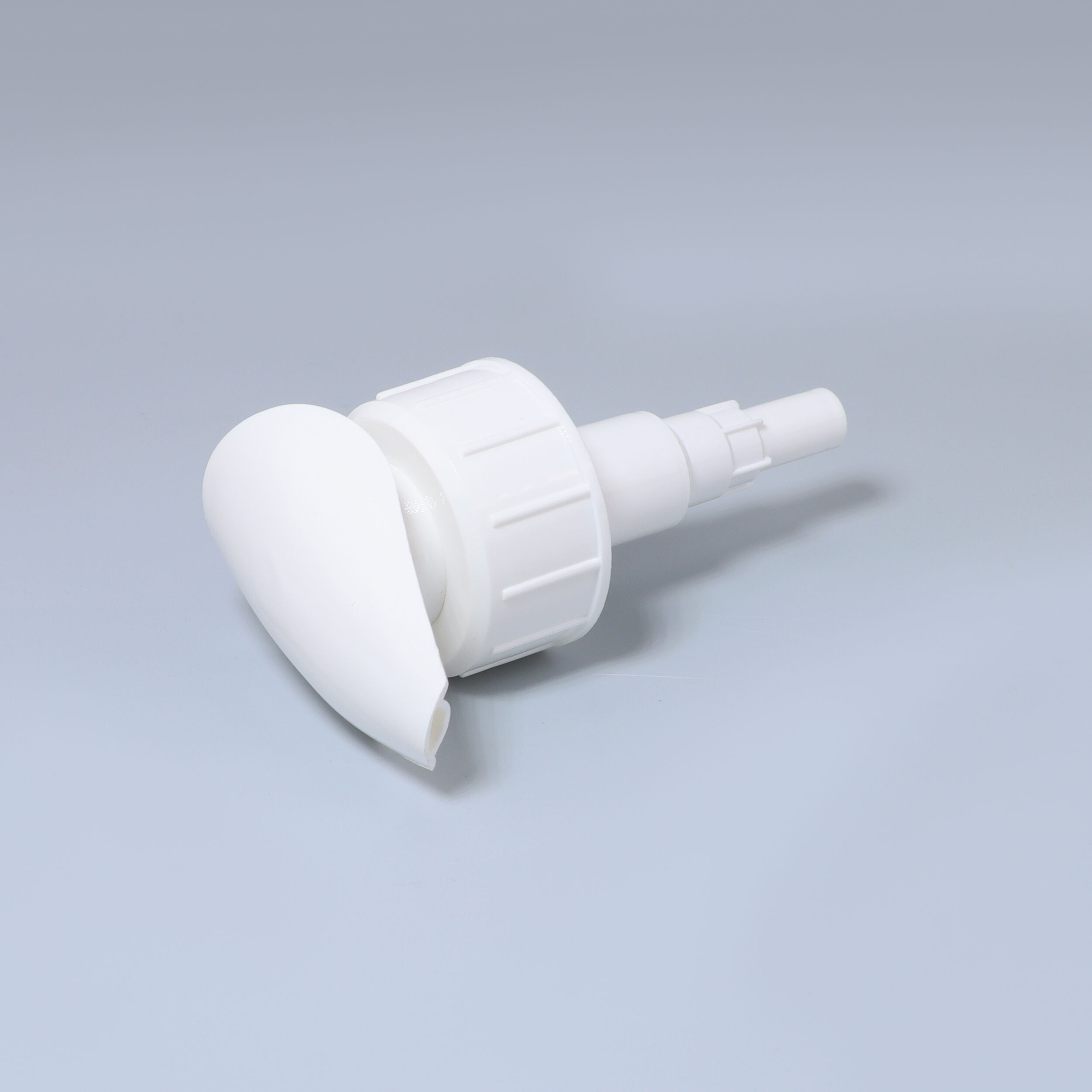
When a 4cc lotion pump fails to maintain its seal during storage, the consequences extend far beyond a simple mess. Product loss, contaminated formulations, damaged packaging, and unsatisfied end consumers are just a few of the downstream effects that manufacturers and brand owners face. Understanding why sealing performance sits at the center of leak prevention logic is essential for anyone sourcing, designing, or specifying a 4cc lotion pump for cosmetic, personal care, or pharmaceutical applications.
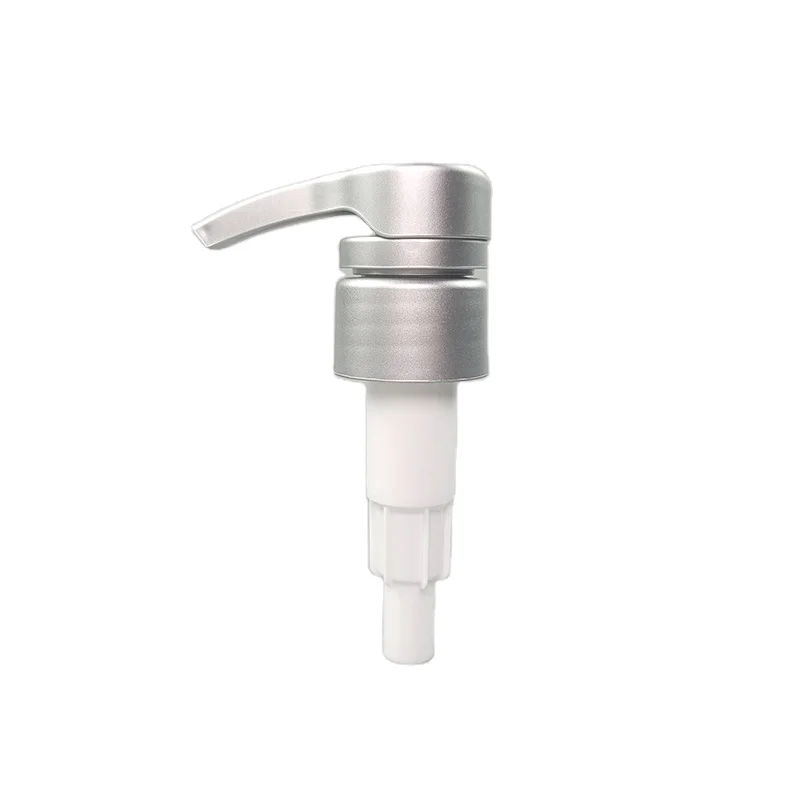
The 4cc lotion pump operates within a precisely engineered system where internal pressure, valve geometry, spring tension, and closure design all work together to keep contents secure. During storage — whether in a warehouse, during transit, or sitting on a retail shelf — the pump is not actively in use, yet it remains under constant environmental and mechanical stress. This is exactly when sealing performance becomes the single most decisive factor determining whether the product arrives intact or leaks away before it ever reaches a consumer's hands.
The Mechanical Reality of a 4cc Lotion Pump During Storage
Static Pressure and Its Effect on Internal Seals
A 4cc lotion pump is not simply an inert component when capped and stored. The internal chamber, dip tube, and piston assembly all remain in contact with the product formulation for potentially extended periods. If the seal between the piston and the pump cylinder is not sufficiently tight, static pressure — caused by temperature fluctuations, altitude changes during air freight, or simply the weight of stacked cartons — can force small amounts of product past the seal and eventually out through the nozzle or the closure gap.
Static sealing is fundamentally different from dynamic sealing, which occurs during active dispensing. During active use, the motion of the piston generates suction and pressure that temporarily assist sealing behavior. During storage, no such mechanical assistance exists. The seal must perform passively and reliably over weeks, months, or even years depending on the product's shelf life requirements. A well-engineered 4cc lotion pump accounts for this distinction by using materials and geometries that maintain compressive force against sealing surfaces without relying on active movement.
This is why pump manufacturers invest significant effort in the hardness, surface finish, and dimensional tolerance of the piston and cylinder components. Even a small deviation in the fit between these two surfaces can create a micro-pathway for liquid to migrate slowly over time, resulting in leakage that may not be immediately visible but becomes apparent after storage periods of several weeks or more.
The Role of the Closure System in Leak Prevention
The smooth closure mechanism on a 4cc lotion pump is not merely a convenience feature. It plays a direct structural role in leak prevention by locking the pump head in a depressed or secured position, which in turn removes actuator travel as a variable during storage. Without a reliable closure, even minor vibrations during shipping can cause the pump head to bounce or oscillate slightly, creating micro-cycles of partial actuation that progressively pump small quantities of product upward through the stem and eventually out through the nozzle.
A smooth-closure 4cc lotion pump addresses this risk by incorporating a twist-lock or press-lock mechanism that immobilizes the actuator head relative to the body. This design ensures that the dip tube and internal valve system remain in a neutral, resting state throughout storage and transit. The elegance of a well-designed closure lies in the fact that it protects the internal sealing geometry from the exact types of incidental forces that storage environments generate most frequently.
It is worth noting that the quality of the closure mechanism is inseparable from the quality of the overall 4cc lotion pump system. A closure that fits loosely or wears quickly will eventually allow actuator movement, defeating the purpose of the design. This is why premium pump designs integrate the closure as a precision-engineered component rather than an afterthought.
Material Science Behind Sealing Performance in a 4cc Lotion Pump
Plastic Component Selection and Chemical Compatibility
The sealing behavior of a 4cc lotion pump is heavily influenced by the plastic materials used in its construction, particularly for the piston, ball valves, and gasket elements. Different polymer grades respond differently to contact with cosmetic formulations, especially those containing alcohol, essential oils, silicones, or surfactants. Over time, chemical incompatibility between the pump's plastic components and the product can cause swelling, softening, or dimensional distortion — all of which degrade sealing performance and create conditions favorable to leakage.
A properly specified 4cc lotion pump uses plastics chosen not just for mechanical strength but for their resistance to the specific product family it will dispense. Polypropylene is a common choice for its balance of chemical resistance, flexibility, and processing ease. However, for formulations with aggressive solvents or high concentrations of active ingredients, additional evaluation of material compatibility is necessary before finalizing a pump specification. The sealing integrity of the 4cc lotion pump over its intended shelf life depends fundamentally on this upstream material selection decision.
Beyond chemical compatibility, the physical aging behavior of plastic materials also affects long-term sealing. Plastics can undergo slow creep under sustained compressive load, gradually relaxing the contact pressure between sealing surfaces. High-quality pump designs account for this by engineering slightly higher initial sealing force to compensate for expected material relaxation over the product's shelf life.
Surface Finish and Dimensional Tolerance as Sealing Factors
In the manufacturing of a 4cc lotion pump, the quality of mold tooling directly determines the surface finish and dimensional accuracy of the internal components. A piston with a rough outer surface will generate uneven contact with the cylinder bore, creating pathways for leakage along the irregularities. Similarly, if the cylinder bore varies in diameter along its length due to mold wear or inadequate process control, the piston cannot maintain consistent sealing contact throughout its range of travel.
Precision tooling produces components with smooth, consistent surfaces and tight dimensional tolerances, ensuring that the 4cc lotion pump's sealing geometry is as designed rather than as manufactured within wide process variations. This is why tooling investment and quality control practices at the pump production stage have a direct downstream effect on the leak prevention reliability experienced by brand owners and consumers.
Consistent wall thickness in the cylinder, uniform piston geometry, and precise spring coil dimensions all contribute to a sealing system that performs predictably across large production volumes. Variability in any one of these parameters introduces variability in sealing performance, which translates directly into a higher rate of leakage incidents across a production batch.
Environmental Stresses That Test Sealing Performance During Storage
Temperature Variation and Its Impact on Pump Seals
Storage environments rarely maintain perfectly stable temperatures. Warehouse conditions, container shipping, air freight, and retail back-stock areas all expose a 4cc lotion pump to temperature cycles that cause the product inside to expand and contract. When a liquid formulation expands due to heat, it generates internal pressure within the sealed bottle and pump system. If the pump's seals are not capable of withstanding this pressure surge, even briefly, product can be forced past the sealing surfaces and accumulate at the nozzle or leak externally.
Temperature also affects the mechanical properties of the plastic components in a 4cc lotion pump. At elevated temperatures, plastics become softer and more compliant, which can either improve or degrade sealing depending on the specific design. If the piston material softens excessively, it may conform better to the cylinder bore, temporarily improving sealing. However, if the softening is uneven or causes dimensional changes that misalign components, the net effect on sealing can be negative and persistent even after temperature normalizes.
Cold temperatures introduce a different challenge. When plastics become stiffer at low temperatures, sealing surfaces that depend on a degree of material flexibility to maintain contact may lose their conforming ability and develop gaps. A 4cc lotion pump destined for cold-chain distribution or cold climate retail markets must be validated not only at room temperature but across the full range of temperatures it will encounter during storage and distribution.
Humidity, Altitude, and Transit Vibration as Leak Risk Factors
Humidity affects the outer packaging and labeling more than the pump itself, but in cases where moisture can interact with hygroscopic formulations through imperfect neck-to-pump sealing, it becomes relevant. The interface between the pump's closure cap and the bottle neck is a secondary sealing zone in the 4cc lotion pump system. If this interface allows moisture ingress or product egress, the leakage risk is compounded even when the internal pump seals are functioning correctly.
Altitude changes during air freight create pressure differentials between the sealed interior of a bottle and the ambient environment. At cruising altitude, cabin pressure in cargo holds may be significantly lower than at ground level, causing the internal pressure of a sealed bottle to push outward against all sealing interfaces, including those within the 4cc lotion pump. Products shipped by air must use pump designs validated for this pressure differential to avoid leakage during flight.
Transit vibration, whether from road transport or conveyors within distribution facilities, subjects a 4cc lotion pump to repeated mechanical impulses. These impulses can cause the pump head to experience micro-movements that, as discussed earlier, generate small pumping actions. They can also cause fatigue in sealing contact zones if the materials or geometries are not robust enough for sustained vibration exposure. A pump validated only under static conditions may underperform significantly when subjected to real-world transit vibration profiles.
Design Features That Maximize Sealing Integrity in a 4cc Lotion Pump
Ball Valve Design and Its Contribution to Leak-Free Storage
Most 4cc lotion pump designs incorporate a ball valve at the base of the pump chamber to prevent backflow of product into the bottle during the return stroke of the piston. During storage, this same ball valve serves a critical secondary function: it blocks any upward migration of product that might otherwise be driven by pressure differentials or formulation expansion. The quality of the ball, its seating geometry, and the spring force holding it in the closed position all directly determine how effectively the valve prevents product from migrating toward the nozzle during storage.
A ball valve in a 4cc lotion pump that is poorly seated, made from a material that degrades in contact with the formulation, or retained by insufficient spring force will fail to maintain this sealing function over time. The result is slow upward migration of product that eventually manifests as nozzle weeping or overt leakage. Selecting a pump with a well-designed ball valve assembly is therefore a non-negotiable requirement for applications where storage integrity is critical.
Spring tension calibration is equally important. The spring must be strong enough to keep the ball firmly seated against its valve surface throughout storage, including during the pressure surges caused by temperature variation and altitude changes. At the same time, it must not be so strong that it impairs the actuation force required during use, as this would negatively affect the consumer experience. Balancing these two requirements requires precise engineering and careful validation.
Neck Gasket and Overcap Sealing as Complementary Protection
The internal seals of a 4cc lotion pump are the primary line of defense against leakage, but the neck gasket — which creates a seal between the pump housing and the bottle neck — is an equally important complementary element. If the neck gasket is improperly compressed, misaligned, or made from a material that degrades over time, product can escape not through the pump mechanism itself but through the interface between the pump and the bottle.
A properly specified 4cc lotion pump includes a neck gasket material and thickness calibrated to the torque range applied during cap installation. Under-torqued installation leaves the gasket insufficiently compressed, creating a leakage path. Over-torqued installation can cause gasket deformation or cracking, which also leads to leakage, particularly after temperature cycling. This balance is typically defined by the pump manufacturer and must be respected during filling line setup and quality control.
The outer closure cap or overcap on a 4cc lotion pump provides additional environmental protection and prevents accidental actuation. When it incorporates a secondary sealing element around the nozzle, it adds a final layer of leak prevention that is particularly valuable for products shipped in mixed-orientation packaging or retail environments where products may be handled roughly before reaching the consumer.
FAQ
Why does a 4cc lotion pump leak during storage even when it looks properly sealed?
Leakage from a 4cc lotion pump during storage is often the result of cumulative stress from temperature changes, transit vibration, and pressure differentials rather than a single obvious defect. The internal sealing surfaces, ball valve, and neck gasket may all be functioning adequately under static room-temperature conditions but begin to allow product migration when exposed to the full range of real-world storage stresses. Validation testing that simulates actual distribution conditions is the most reliable way to identify and correct these vulnerabilities before production launch.
How does the smooth closure on a 4cc lotion pump help prevent leakage?
The smooth closure on a 4cc lotion pump locks the actuator head in a fixed, depressed position that prevents incidental movement during storage and transit. By immobilizing the pump head, the closure eliminates micro-pumping actions caused by vibration and handling, which are a primary cause of product migration toward the nozzle. A well-designed smooth closure is precision-fitted to the pump body and maintains its locking function reliably throughout the expected storage period without degrading or loosening.
What materials in a 4cc lotion pump are most critical for long-term sealing performance?
The piston, cylinder bore, ball valve, and neck gasket are the components most directly responsible for sealing performance in a 4cc lotion pump. The materials used for these components must be chemically compatible with the product formulation, mechanically stable across the expected storage temperature range, and dimensionally consistent to ensure uniform sealing contact. Polypropylene is commonly used for structural components, while the gasket material must be selected based on specific compatibility testing with the product being dispensed.
How can brand owners verify the sealing performance of a 4cc lotion pump before committing to production?
Brand owners should request standardized leakage testing data from the pump supplier, including results from temperature cycling, altitude simulation, and vibration testing protocols. Conducting independent inversion leak tests, drop tests, and accelerated aging studies using actual product formulations at both ambient and elevated temperatures provides additional confidence. The 4cc lotion pump should be tested as part of the complete package — including the bottle, neck gasket, and closure — rather than as an isolated component, since sealing performance is a system-level property that depends on all interfaces functioning correctly together.
Table of Contents
- The Mechanical Reality of a 4cc Lotion Pump During Storage
- Material Science Behind Sealing Performance in a 4cc Lotion Pump
- Environmental Stresses That Test Sealing Performance During Storage
- Design Features That Maximize Sealing Integrity in a 4cc Lotion Pump
-
FAQ
- Why does a 4cc lotion pump leak during storage even when it looks properly sealed?
- How does the smooth closure on a 4cc lotion pump help prevent leakage?
- What materials in a 4cc lotion pump are most critical for long-term sealing performance?
- How can brand owners verify the sealing performance of a 4cc lotion pump before committing to production?