
 EN
EN



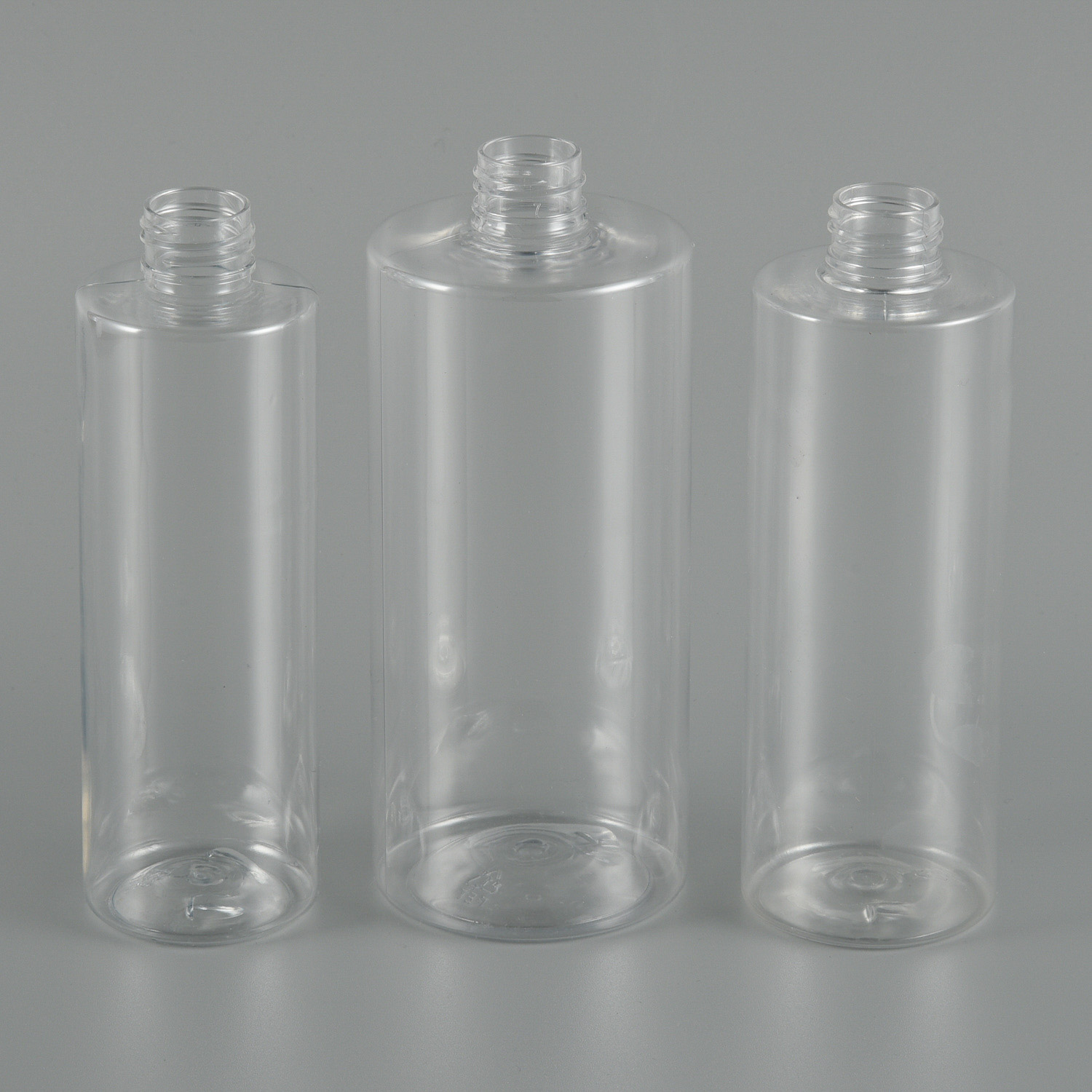
The relationship between plastic bottle design and storage efficiency is far more deliberate than most people realize. Every curve, edge, shoulder profile, and base geometry on a plastic bottle is engineered with spatial logic in mind. Whether filling warehouse shelves, retail display units, or consumer medicine cabinets, the physical form of a plastic bottle directly determines how many units can occupy a given space, how safely they stack, and how efficiently they can be transported and stored across the supply chain.
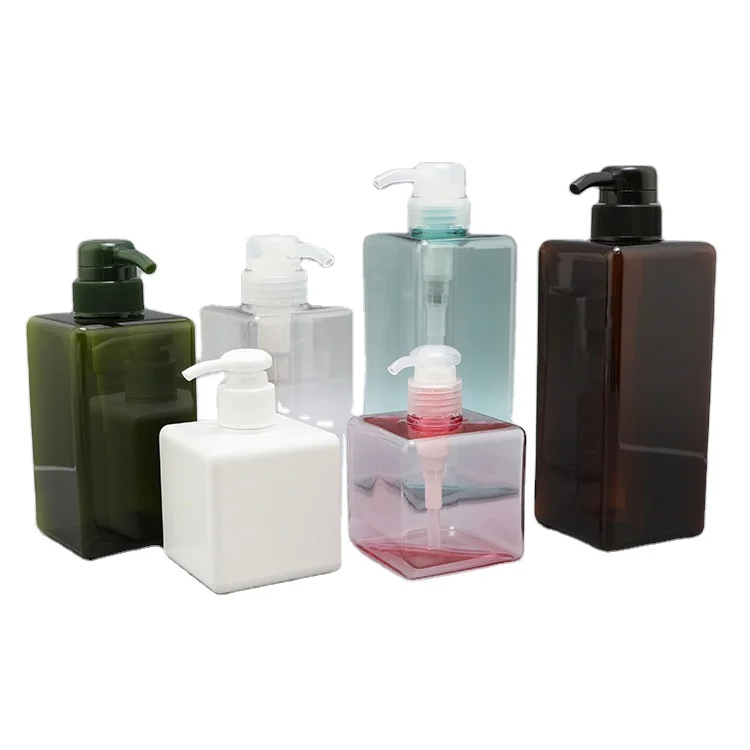
Understanding how a plastic bottle is shaped, proportioned, and structured gives manufacturers, retailers, and brand owners a powerful lever for reducing logistics costs and maximizing shelf density. This article explores the core design principles that allow a plastic bottle to become not just a functional container, but a spatial optimization tool that benefits every stage of the product lifecycle — from factory floor to end consumer.
The Geometry Behind Efficient Plastic Bottle Design
Square and Rectangular Profiles vs. Round Bottles
One of the most impactful decisions in plastic bottle design is the choice between a round profile and a square or rectangular profile. Round plastic bottle shapes, while ergonomically intuitive, leave dead space between units when packed side by side. This wasted air volume accumulates significantly at scale, reducing the number of units per pallet and increasing shipping costs proportionally.
Square and rectangular plastic bottle formats, by contrast, allow face-to-face contact between adjacent units. This tessellating quality means that more bottles fit within the same footprint, whether on a warehouse shelf or inside a shipping carton. The plastic bottle industry has increasingly adopted square designs precisely because they address this spatial inefficiency head-on.
From a practical standpoint, a square plastic bottle also tends to resist rolling on flat surfaces, which reduces handling errors during warehouse picking and packing operations. This stability advantage compounds the space-efficiency benefit by improving throughput in fast-moving distribution environments.
Shoulder Design and Vertical Stacking Logic
The shoulder — the transitional zone between a plastic bottle's body and its neck — plays a significant role in vertical stacking behavior. A flat or gently tapered shoulder allows caps and bases to nest more naturally against one another when bottles are inverted or stacked in secondary packaging. This nesting reduces overall stack height per unit and allows higher pack densities in corrugated shipping cases.
Designs where the shoulder of a plastic bottle features an outward ledge or wide platform also allow secondary trays to sit securely on top without compressing the bottle's structural walls. This is particularly relevant for heavy-fill products like hand sanitizers, lotions, or industrial fluids where the bottle must bear significant vertical load during palletization.
Engineers who design plastic bottle molds spend considerable time optimizing shoulder geometry to balance aesthetic appeal with load-bearing capacity. The result is a product that looks attractive on a retail shelf while simultaneously supporting efficient palletized storage in distribution centers.
Wall Thickness, Lightweighting, and Material Efficiency
Achieving Structural Integrity with Minimal Material
A well-designed plastic bottle does not need to be thick-walled to be strong. Advances in material science and blow-molding process control have made it possible to produce a plastic bottle with optimized wall thickness distribution — thicker where stress concentrates near the base and handle zones, and thinner in areas that bear less load. This approach, known as lightweighting, reduces the total mass of each plastic bottle without compromising its functional integrity.
Lighter plastic bottle units mean more units can be shipped within the same gross weight constraints imposed by freight carriers. This directly translates to a lower cost per unit shipped. For categories like personal care, household chemicals, and food packaging, where millions of plastic bottle units move through global supply chains annually, even a modest reduction in bottle weight produces measurable logistics savings.
PETG and similar advanced plastic resins allow designers to create a plastic bottle with excellent clarity and rigidity at thinner gauges than traditional PET or HDPE. The material itself becomes part of the spatial optimization strategy, enabling sleeker profiles that take up less physical space while maintaining the shelf presence brands require.
Panel Design and Vacuum Resistance
Hot-fill and vacuum-sealed products create internal pressure differentials that can distort a plastic bottle's walls, causing irregular surface deformation that makes bottles difficult to stack cleanly. To counteract this, designers incorporate vacuum panels — recessed flat zones on the plastic bottle's body that flex inward in a controlled manner, absorbing pressure changes without distorting the overall bottle geometry.
When vacuum panels are positioned strategically, they maintain the dimensional consistency of the plastic bottle under varying fill and storage conditions. This consistency is critical for automated packaging lines where bottle irregularities can cause jam events and reduce throughput. Consistent geometry also ensures that case-packed bottles remain in tight, predictable formation throughout shipping.
The aesthetic integration of vacuum panels is an area where industrial design skill is particularly evident. The best panel designs look intentional and branded rather than purely functional, giving a plastic bottle the dual advantage of clean visual design and robust mechanical performance under pressure.
Volume Standardization and Modular Sizing Across Product Lines
Building a Family of Bottles with Shared Footprints
Brands that sell multiple SKUs benefit enormously from designing a plastic bottle family with shared base footprints. When a 250ml, 450ml, and 650ml plastic bottle all share the same width and length dimensions at the base, they can be stored, displayed, and shipped using the same shelf fixtures, case configurations, and pallet patterns. Only the height changes, not the ground-plane geometry.
This modular approach to plastic bottle design simplifies warehouse slotting decisions. Pick-and-pack workers and automated picking systems can treat all sizes as functionally interchangeable in terms of spatial orientation. Retail planogram designers benefit equally because they can build consistent display blocks without redesigning shelf layouts for each SKU.
Modular sizing also reduces tooling complexity. When a plastic bottle family is designed around a shared base, mold investments can focus on height extensions rather than entirely new geometries. This accelerates time-to-market for new volumes and reduces the capital cost of expanding a product range.
Standardized Cap and Pump Dimensions for Unified Handling
The neck finish and closure type on a plastic bottle significantly affect how bottles interact with each other during storage. A standardized closure diameter across a product family means that inversion stacking — where the closed top of one bottle rests against the base of another — produces a consistent and stable column. This is particularly useful in secondary packaging where inner case configurations are designed to maximize height utilization.
Lotion pump bottles with standardized pump head heights allow retailers to set uniform shelf height allocations across a category. When pump height varies unpredictably across different plastic bottle SKUs, planogram engineers must accommodate the tallest unit, leaving wasted vertical space above shorter units. Standardization eliminates this inefficiency and can increase the number of display rows per gondola section.
From a consumer handling perspective, uniform closure size also simplifies the experience of opening and using a plastic bottle, contributing to brand perception and repeat purchase behavior. The practical benefits of standardization thus extend beyond logistics into the consumer experience itself.
Case and Pallet Optimization Through Bottle Form Factor
Designing the Bottle Around the Shipping Case
The most sophisticated plastic bottle design processes begin not with aesthetics but with packaging mathematics. Engineers calculate how many plastic bottle units should ideally fit within a standard corrugated case, then work backward to determine what bottle dimensions will produce that count without wasted internal case space. This reverse-engineering approach ensures that every millimeter of case volume is productive.
When a plastic bottle is dimensioned to produce whole-number multiples across case width, depth, and height, the case fill rate approaches 100%. Fractional dead spaces — those small gaps between bottles and case walls — are eliminated through careful dimension selection. The result is a plastic bottle that ships in exactly the configuration for which the case was designed, with no internal product movement during transit.
Pallet optimization follows similar logic. A plastic bottle whose case dimensions are chosen to align with standard pallet footprints — typically 1200mm x 1000mm or 1200mm x 800mm depending on regional standards — will produce full-coverage pallet layers with no overhang or underhang. This maximizes pallet cubic utilization and reduces the risk of load instability during transportation.
Reducing Dead Space in Retail and Warehouse Storage
In retail environments, shelf depth standardization means that a plastic bottle designed with a specific depth dimension can fill a shelf from front to back with a precise number of units, leaving no wasted gap at the rear. Planners who specify bottle dimensions in coordination with retail shelf dimensions can achieve front-to-back fill rates that maximize display density and reduce restocking frequency.
In warehouse storage, the vertical clearance between pallet layers is another area where plastic bottle design contributes to space optimization. Bottles with consistent, predictable height allow warehouse operators to minimize the beam height between rack levels, fitting more pallet levels within the same building height. For high-bay warehouses, this can mean the difference between four and five storage levels — a significant difference in storage capacity per square meter of floor space.
The cumulative impact of these design decisions on a business's total logistics cost is substantial. A plastic bottle designed with spatial optimization in mind is not just a container — it is a cost management instrument that pays dividends throughout the entire supply chain lifecycle.
FAQ
Why do square plastic bottles store more efficiently than round ones?
Square plastic bottle designs allow units to sit flush against each other with no wasted air space between them. Round bottles leave triangular gaps at every contact point, reducing pack density in cases and on shelves. Square bottles tessellate perfectly, meaning more units fit within the same volume, which directly reduces per-unit shipping costs and improves storage density in warehouses and retail environments.
How does plastic bottle lightweighting contribute to space efficiency?
Lightweighting reduces the wall thickness of a plastic bottle without compromising structural performance. Thinner walls mean the external dimensions of the plastic bottle can be slightly reduced, allowing marginally more units per case or pallet layer. Additionally, lighter bottles allow more units to be loaded before reaching freight weight limits, so space efficiency and weight efficiency improve simultaneously.
What role does neck finish standardization play in plastic bottle storage?
When the neck finish and closure height are standardized across a plastic bottle product family, all sizes behave predictably during stacking, case packing, and shelf display. Uniform pump or cap heights allow retailers to set consistent shelf allocations, reducing wasted vertical space above shorter units. Standardized necks also simplify automated handling on production and packaging lines, improving overall throughput efficiency.
How is a plastic bottle designed to align with pallet dimensions?
Designers calculate the ideal plastic bottle dimensions by working backward from standard pallet footprints and case sizes. The goal is to produce whole-number unit counts across all three dimensions of the shipping case, and to ensure that case dimensions tile cleanly across the pallet surface with no overhang. When this alignment is achieved, pallet cubic utilization approaches its theoretical maximum, reducing the number of pallet movements and storage positions required per unit sold.