
 EN
EN



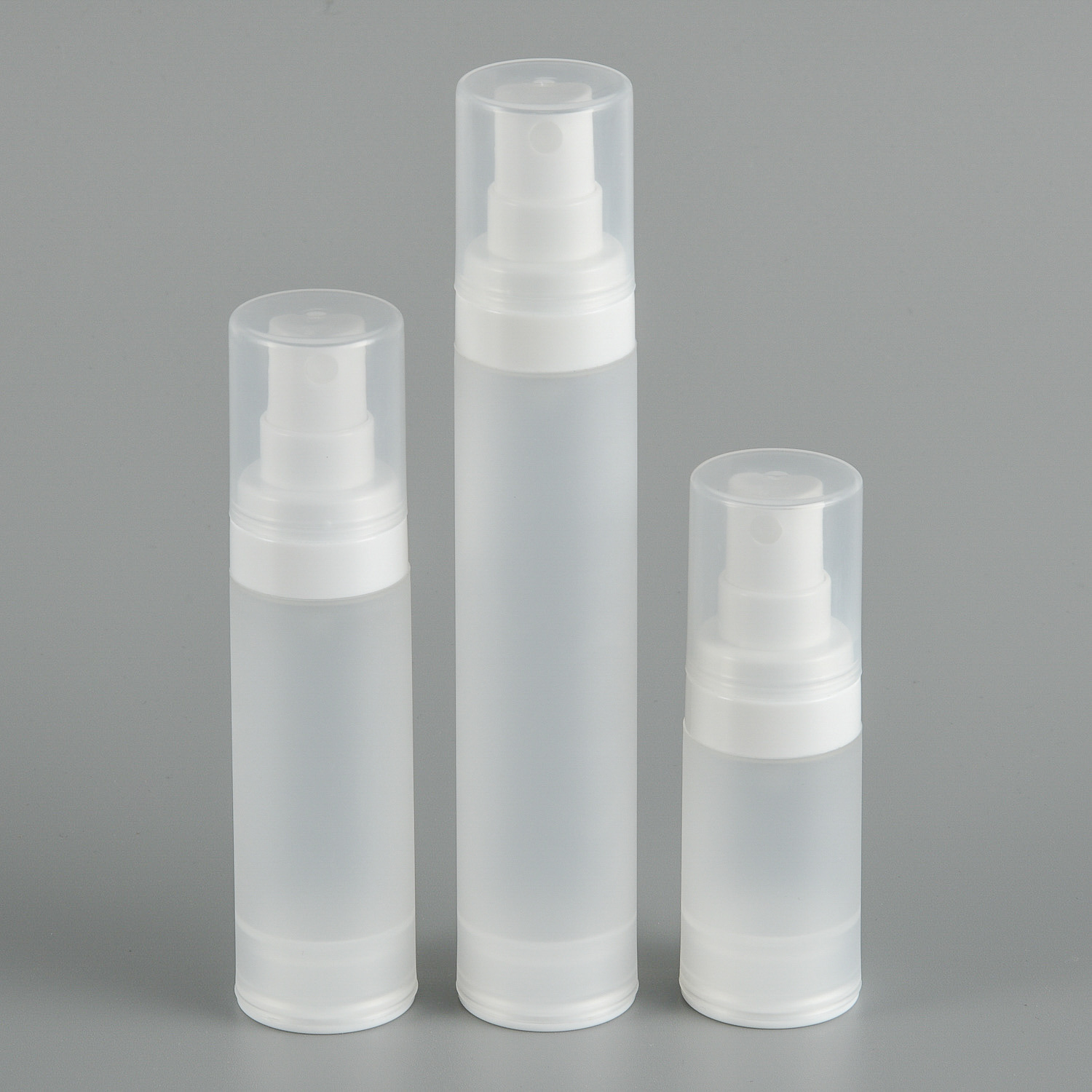
When a cosmetic or skincare formulation is packaged in a conventional container, a significant portion of the product often remains trapped at the bottom or along the inner walls, impossible to retrieve with a standard pump or through manual scooping. This residue problem is not merely a consumer inconvenience — it represents real financial waste for brands and end users alike. The airless bottle was engineered precisely to address this challenge, using a fundamentally different mechanical approach to dispensing that dramatically reduces leftover product across repeated use cycles.
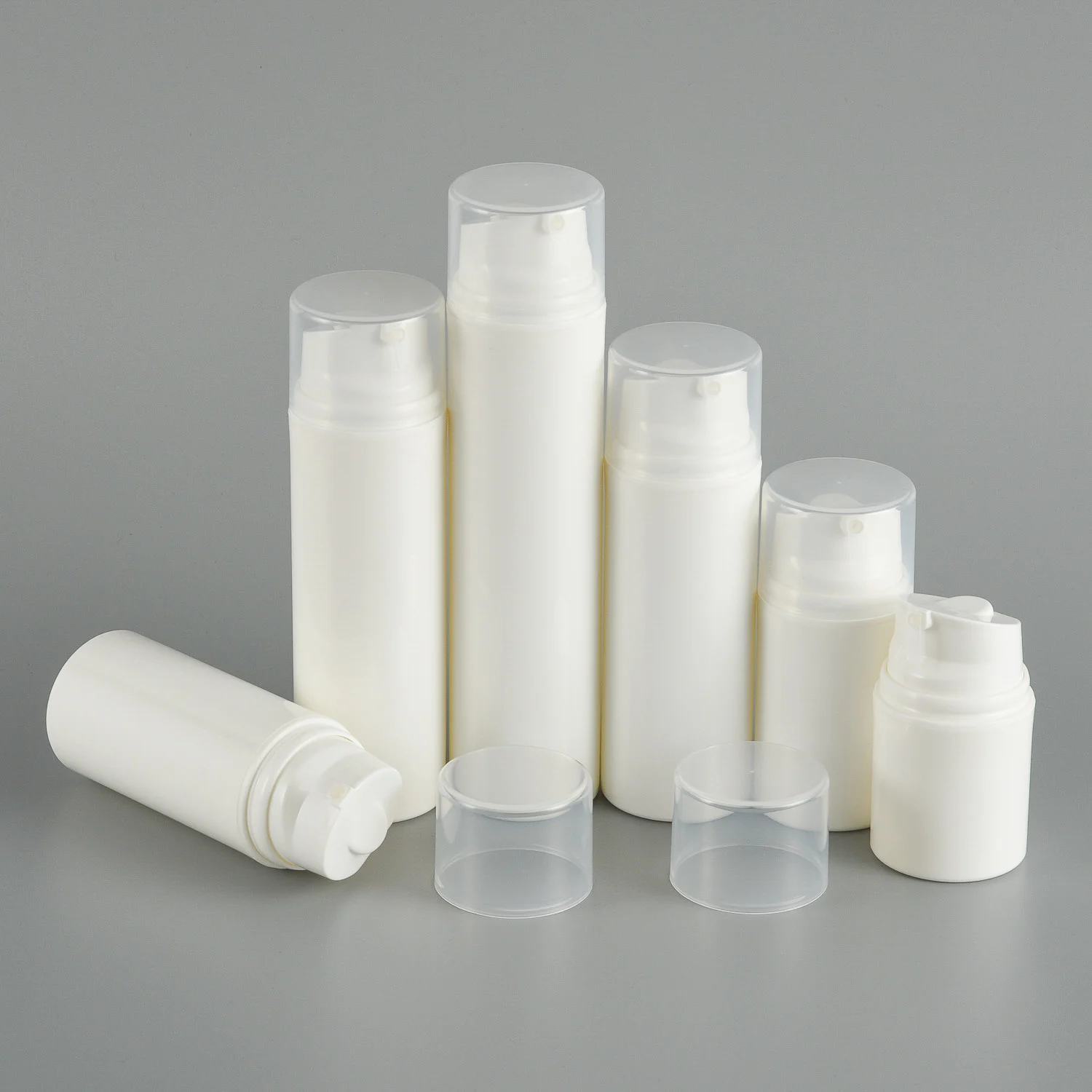
Understanding how the airless bottle achieves this low-residue performance requires a closer look at its internal mechanics, material design, and the physical principles that govern how product moves from the container to the nozzle. Unlike a traditional pump bottle that draws product through a dip tube submerged in a reservoir open to air, the airless bottle relies on a sealed vacuum-based system. This distinction changes everything about how efficiently a formulation can be extracted over its entire useful life.
The Core Mechanism Behind Airless Bottle Performance
How the Piston-Driven System Works
At the heart of every airless bottle is a disc-shaped piston that sits at the base of the inner chamber. When the user presses the pump actuator at the top, a slight vacuum is created inside the sealed container. This vacuum draws the piston upward from the bottom, pushing the product toward the dispensing nozzle without the need for atmospheric air to enter the formulation reservoir.
This upward piston movement is continuous and consistent across every pump cycle. As product is dispensed, the piston rises incrementally, always maintaining close contact with the remaining formulation above it. The result is that the product layer between the piston surface and the pump intake remains extremely thin at all times, minimizing the volume of unreachable material.
Traditional bottles rely on gravity and atmospheric pressure to feed product through a dip tube, which means the last portion of product near the bottom and sides of the container is progressively harder to access. The airless bottle eliminates this geometry problem entirely because the piston itself acts as a mobile floor that continuously reduces available dead space.
The Role of Vacuum Seal Integrity
The effectiveness of the airless bottle system depends heavily on maintaining a consistent vacuum seal throughout the product's life cycle. If air were to leak into the chamber past the piston, the upward movement would become erratic, and residue would accumulate where the piston fails to reach. High-quality airless bottle designs incorporate precision-molded piston edges that press firmly against the inner cylinder walls, preventing bypass leakage.
This seal integrity also ensures that the piston does not tilt or bind during its upward travel. Binding would leave a thin crescent-shaped film of product along the cylinder wall that the piston edge cannot clean. Manufacturers address this by engineering tight dimensional tolerances in both the piston diameter and the inner wall surface finish, keeping residue formation to a structural minimum.
Over repeated use cycles — often several hundred actuations for a single airless bottle — the seal must remain effective without degrading. This is why material selection for the piston and cylinder is critical, as we explore in a later section of this article.
Geometric Design Features That Reduce Leftover Product
Cylindrical Inner Chamber Geometry
The cylindrical shape of the airless bottle inner chamber is not accidental. A cylinder allows the piston to maintain full surface contact across its entire travel path without leaving corner pockets or recessed zones where product can accumulate. Compare this to containers with tapered bottoms, angular shoulders, or irregular profiles — each geometric deviation creates a zone where residue is statistically likely to remain.
The straight-walled cylinder also makes it easier to maintain consistent piston-to-wall contact pressure throughout the full dispensing range. From the first use cycle to the last, the airless bottle chamber geometry supports the same quality of piston sealing, which translates directly into consistent low-residue performance across the product's entire intended lifespan.
Some airless bottle designs introduce a slight inward taper toward the pump intake port at the top, which helps funnel the final traces of product toward the nozzle as the piston reaches its uppermost position. This detail alone can reduce terminal residue — the amount remaining when the piston cannot travel further — by a meaningful margin.
Pump Intake Port Positioning and Design
In a traditional pump bottle, the dip tube inlet sits slightly above the true bottom of the container, meaning product below that threshold is inaccessible. The airless bottle eliminates the dip tube entirely. The pump intake port is located at the very top of the sealed chamber, directly above the product column that the piston is pressing upward.
This configuration means the intake port is always in contact with the leading edge of the product being pushed upward by the rising piston. There is no geometric gap between what the piston can reach and what the pump can intake. The combination of piston movement and intake port placement creates a dispensing system where virtually the entire formulation volume is accessible for extraction.
The airless bottle's pump intake is also engineered with a short, wide channel rather than a long narrow tube, reducing flow resistance and ensuring that even high-viscosity formulations can be drawn upward efficiently without leaving a sticky residual film inside an extended tube pathway.
Material Selection and Surface Characteristics
Inner Wall Surface Finish and Its Impact on Residue
The finish of the inner cylinder wall in an airless bottle has a direct influence on how effectively the piston wipes the surface with each upward increment of travel. A smooth, polished inner surface minimizes the micro-pores and texture variations where product can lodge and resist being swept forward by the piston edge. High-grade airless bottle producers specify tight surface roughness parameters for the inner cylinder to ensure the piston wipe is thorough at every cycle.
Hydrophobic or low-surface-energy inner wall materials further reduce adhesion between the formulation and the cylinder wall. Aqueous products, oils, and emulsions behave differently on different polymer surfaces. Choosing inner wall materials with compatibility to the specific formulation type ensures that product does not bond to the wall surface and create a film layer that the piston cannot fully dislodge.
This material consideration becomes especially important for high-viscosity products such as rich creams, gel-based serums, or silicone-loaded formulations. These products have greater adhesion potential, and the airless bottle must be designed with appropriate inner surface characteristics to prevent a thickening residue layer from building up over repeated use cycles.
Piston Material Compliance and Flexibility
The piston in an airless bottle is typically made from a soft, compliant polymer such as polyethylene or a thermoplastic elastomer. This compliance allows the piston edge to deform slightly against the cylinder wall, maintaining a consistent wiping seal even in cases of minor dimensional variation or thermal expansion during storage and use.
A rigid piston would risk leaving a thin gap between itself and the cylinder wall, allowing product to bypass the leading edge and accumulate behind the piston as a permanently inaccessible residue. The flexibility of the piston material is therefore a functional design choice, not merely a manufacturing convenience.
Over the life of an airless bottle, the piston undergoes many compression and relaxation cycles as it is actuated repeatedly. The piston material must maintain its elasticity and sealing performance throughout this mechanical history. Materials that creep, harden, or crack under sustained load will progressively leave more residue with each passing use cycle, undermining the system's fundamental purpose.
Residue Reduction Across Different Formulation Types
Performance with Low-Viscosity and High-Viscosity Products
One of the practical strengths of the airless bottle design is that it performs effectively across a wide viscosity range. Low-viscosity liquid serums and toners flow readily toward the pump intake under minimal piston pressure, and the sealed system prevents the kind of air-driven separation that causes thin products to pool unevenly in conventional containers.
For high-viscosity products, the piston exerts the necessary mechanical force to push thick formulations forward without the product losing cohesion or leaving a dense residue wall behind the pump intake. Because the piston moves the product rather than relying on gravity or air pressure alone, viscous formulations remain just as accessible in the final twenty percent of the airless bottle's content as they were in the first twenty percent.
This viscosity-agnostic performance is a key reason why the airless bottle has become the preferred packaging format for premium serums, concentrated actives, and sensitive emulsions where ingredient waste is both financially costly and functionally significant for the consumer experience.
Protection Against Oxidation-Driven Formulation Loss
Residue is not only a mechanical problem — it is also a formulation stability problem. In conventional packaging, the air headspace above the remaining product progressively oxidizes the exposed surface, degrading active ingredients and sometimes causing the surface layer to solidify or separate. This degraded surface residue then resists dispensing and cannot be effectively used by the consumer.
The airless bottle eliminates the air headspace entirely through its piston-sealing design. As product is dispensed, the piston fills the evacuated space from below, ensuring that there is never a gap where atmospheric oxygen can contact the remaining formulation. This means that the product at the end of the airless bottle's life cycle is chemically equivalent to the product dispensed at the beginning — no oxidative degradation, no surface crust, no chemically altered residue layer.
For formulations containing antioxidants, retinoids, vitamin C derivatives, or other oxidation-sensitive actives, this protection directly translates into higher effective product utilization. Every dose remains potent, and no formulation is lost to chemical degradation that would otherwise manifest as an unusable residue in a conventional container.
FAQ
What percentage of product can a well-designed airless bottle typically recover compared to a conventional pump bottle?
A properly engineered airless bottle can typically recover ninety to ninety-eight percent of its total fill volume, whereas conventional pump bottles with dip tubes often leave ten to twenty percent of their content as inaccessible residue. The actual recovery rate depends on formulation viscosity, inner cylinder finish quality, and piston sealing precision, but the structural advantage of the airless bottle format is consistent across most formulation types.
Does the residue reduction performance of an airless bottle decline over repeated use cycles?
In a well-manufactured airless bottle, residue reduction performance remains stable throughout the full use cycle because the piston's sealing mechanism is maintained by material compliance rather than a consumable component. However, if the piston material degrades, cracks, or loses elasticity due to chemical incompatibility or mechanical fatigue, performance can decline. This is why matching piston material to formulation chemistry is an important part of airless bottle selection.
Can an airless bottle be used effectively with formulations that contain particulates or exfoliating particles?
Airless bottle designs can accommodate formulations with fine particulates, but very coarse particles may interfere with the pump valve mechanism or create an uneven residue layer if particles settle unevenly against the piston surface. For formulations with active exfoliating beads or granular components, a wider pump orifice and smooth piston surface finish are recommended to maintain the low-residue dispensing performance that the airless bottle format is known for.
How does airless bottle size affect residue levels at the end of use?
Smaller airless bottle formats such as thirty-milliliter or fifty-milliliter sizes tend to show slightly higher residue percentages at end-of-use than larger formats, because the terminal dead volume — the space above the piston at its highest travel position — becomes proportionally more significant relative to total fill volume. Larger formats dilute this terminal volume effect across a greater total product quantity. Regardless of size, the airless bottle consistently outperforms conventional dip-tube packaging in total product recovery.
Table of Contents
- The Core Mechanism Behind Airless Bottle Performance
- Geometric Design Features That Reduce Leftover Product
- Material Selection and Surface Characteristics
- Residue Reduction Across Different Formulation Types
-
FAQ
- What percentage of product can a well-designed airless bottle typically recover compared to a conventional pump bottle?
- Does the residue reduction performance of an airless bottle decline over repeated use cycles?
- Can an airless bottle be used effectively with formulations that contain particulates or exfoliating particles?
- How does airless bottle size affect residue levels at the end of use?