
 EN
EN



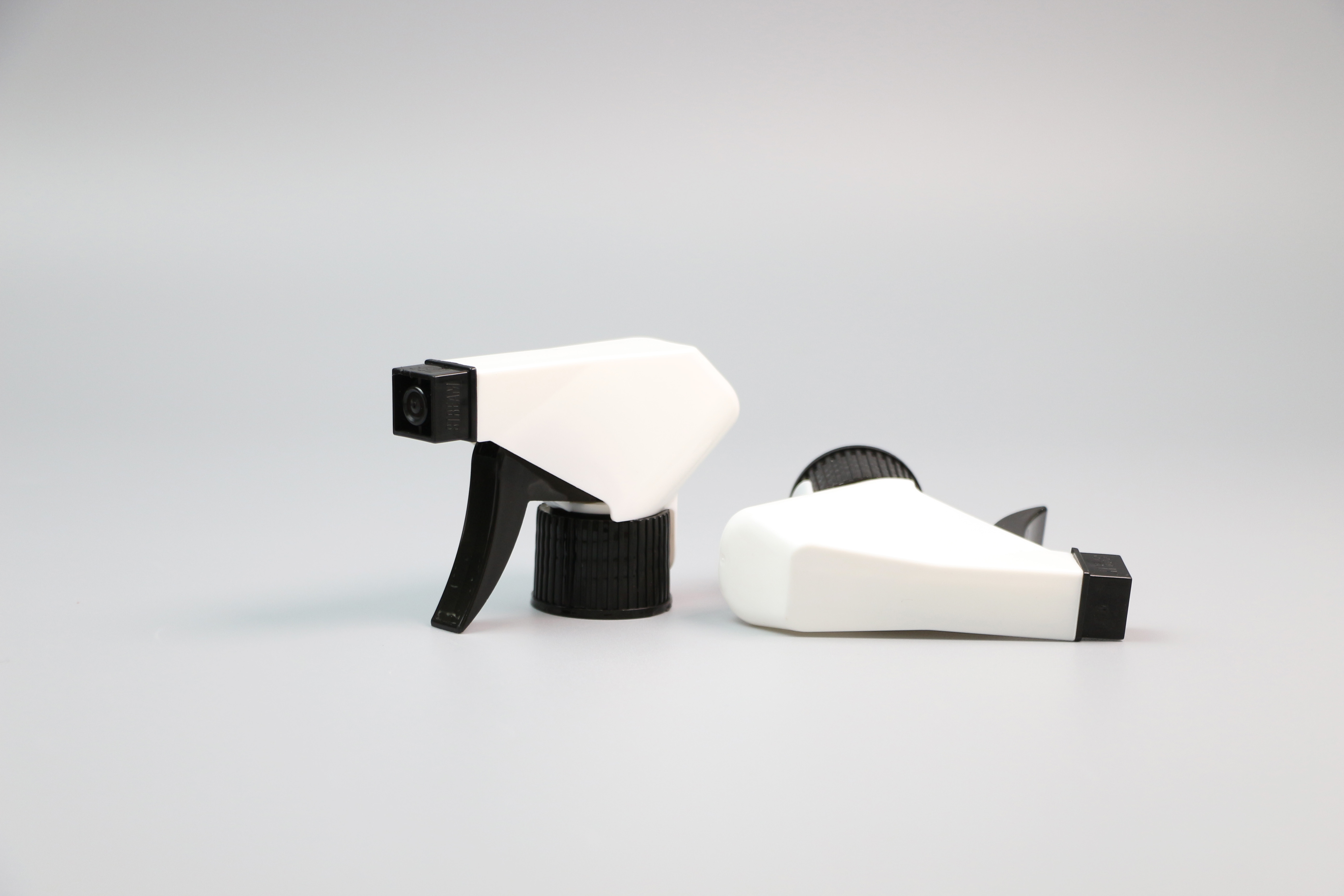
When evaluating the performance of a trigger sprayer, most buyers focus on pump mechanism, bottle compatibility, or output volume. Yet the single component that most directly determines whether a trigger sprayer succeeds or fails in a given application is the nozzle. The nozzle is the final point of contact between the product inside the bottle and the surface or environment it is meant to treat, and its geometry, material, and adjustability govern everything from droplet size to spray angle to liquid penetration depth.
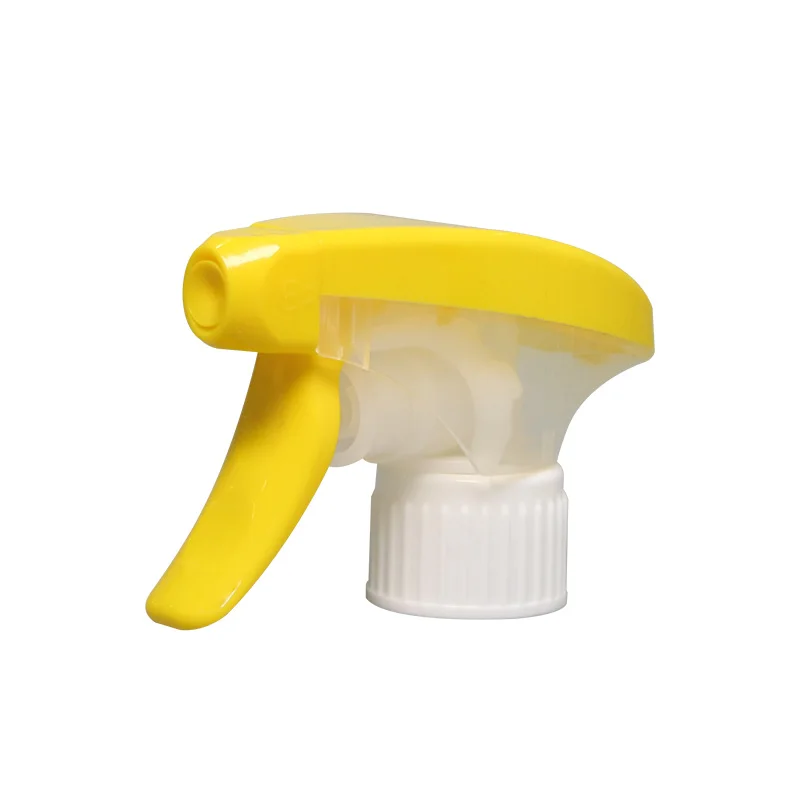
Understanding why nozzle design is so critical requires looking at the full range of spray requirements that a trigger sprayer must serve across industries. A household cleaning product demands a wide, even mist that coats surfaces quickly. A garden pesticide needs a focused stream that reaches deep into foliage without excessive drift. A foam-based cleaner requires a nozzle that can aerate the liquid and deliver a clinging foam layer. Each of these outcomes is impossible without a nozzle engineered specifically for that purpose, which is why nozzle design sits at the center of any serious trigger sprayer performance discussion.
The Functional Role of the Nozzle in a Trigger Sprayer
How the Nozzle Translates Pump Energy into Spray Output
Every trigger sprayer operates by converting manual pumping force into pressurized liquid flow. The pump mechanism builds pressure inside the chamber, and when that pressure is released through the nozzle orifice, the liquid is atomized or directed according to the nozzle's internal geometry. The nozzle is therefore not a passive outlet — it is an active shaping device that determines how energy is converted into spray behavior.
The diameter of the nozzle orifice controls flow rate and droplet size. A smaller orifice produces finer droplets and a more diffuse mist, while a larger orifice allows higher volume output with coarser droplets. The internal channel shape — whether straight, swirl-inducing, or fan-shaped — further modifies how the liquid exits and disperses. These design variables must be matched to the viscosity and surface tension of the liquid being dispensed, which is why a trigger sprayer designed for water-based cleaners may perform poorly with thicker formulations if the nozzle is not reconfigured.
Nozzle Position and Spray Angle Control
Beyond the orifice itself, the angular orientation of the nozzle exit and the presence of deflector surfaces inside the nozzle head determine the spray cone angle. A trigger sprayer used for surface disinfection typically benefits from a wide fan spray that covers large areas in fewer strokes. In contrast, a trigger sprayer used for targeted spot treatment needs a narrow cone or a direct stream to avoid wasting product on unintended surfaces.
Many modern trigger sprayer designs incorporate a rotating nozzle collar that allows the user to switch between spray patterns — typically mist, stream, and foam — by turning the nozzle head. This adjustability is only possible because the internal nozzle geometry is designed with multiple channel configurations that align with the outlet at different rotation positions. The precision of this mechanism directly affects how cleanly each mode performs and how reliably the trigger sprayer transitions between spray requirements.
Spray Pattern Types and Their Nozzle Design Requirements
Fine Mist Nozzles for Surface Coverage Applications
Fine mist output is one of the most common requirements for a trigger sprayer used in household, personal care, and light industrial cleaning contexts. Achieving a true fine mist requires a nozzle with a small orifice diameter, a swirl chamber that imparts rotational energy to the liquid, and an exit geometry that promotes radial dispersion. When these elements are correctly proportioned, the trigger sprayer produces droplets small enough to remain airborne briefly and settle evenly across a surface.
The challenge with fine mist nozzles is clogging. Because the orifice is small, any particulate matter in the liquid or mineral deposits from water-based formulations can block the channel and degrade spray quality. Nozzle material selection — typically polypropylene or polyacetal — and the smoothness of internal surfaces both play a role in resisting buildup. A well-designed fine mist nozzle for a trigger sprayer will also include a self-cleaning wiper or a recessed orifice that reduces post-spray drip and residue accumulation.
Stream Nozzles for Targeted and Long-Range Delivery
Stream mode in a trigger sprayer is used when the application requires directional precision — reaching into crevices, treating specific spots, or projecting liquid over a longer distance without dispersion. The nozzle design for stream output is fundamentally different from mist: the internal channel is straight and cylindrical, with minimal turbulence-inducing geometry, so the liquid exits as a coherent jet rather than an atomized cloud.
Stream nozzles must balance flow velocity with output volume. Too much velocity with a narrow orifice can cause the stream to break up prematurely due to aerodynamic instability, while too large an orifice reduces the reach and precision of the stream. For a trigger sprayer serving agricultural, automotive, or industrial maintenance applications, stream nozzle calibration is critical to ensuring that the product reaches the intended target without excessive overspray or product waste.
Foam Nozzles and the Role of Air Integration
Foam output represents the most mechanically complex nozzle requirement for a trigger sprayer. Generating foam requires the nozzle to introduce air into the liquid stream and create turbulence that traps air bubbles within the liquid matrix. This is typically achieved through an air intake port positioned upstream of the nozzle exit, combined with a mesh or baffle structure that promotes mixing and bubble formation.
The density and stability of the foam produced by a trigger sprayer depend heavily on the ratio of air to liquid, the mesh pore size, and the surface tension of the formulation. A foam nozzle designed for a low-viscosity cleaner will produce a different foam quality than one designed for a thicker, surfactant-rich product. This is why foam nozzle design must be developed in conjunction with the specific liquid formulation, and why a trigger sprayer with a generic foam setting may not deliver acceptable foam quality across all product types.
Material and Durability Considerations in Nozzle Design
Chemical Compatibility Between Nozzle Materials and Liquid Formulations
The nozzle of a trigger sprayer is in continuous contact with the dispensed liquid, which means material compatibility is a non-negotiable design requirement. Aggressive cleaning agents, solvents, acids, and alkaline formulations can degrade certain plastics over time, causing swelling, cracking, or dimensional changes that alter spray performance. Polypropylene is the most widely used nozzle material due to its broad chemical resistance, but specific formulations may require polyethylene, PTFE-lined components, or other engineered polymers.
When a trigger sprayer is selected for a chemically aggressive application, the nozzle material specification should be verified against the formulation's chemical profile before deployment. A nozzle that degrades chemically will not only fail mechanically — it may also contaminate the dispensed product or alter the spray pattern in ways that compromise application effectiveness. This is a particularly important consideration in professional cleaning, agricultural, and industrial maintenance contexts where trigger sprayer reliability directly affects operational outcomes.
Wear Resistance and Long-Term Spray Consistency
In high-frequency use environments, nozzle wear is a real performance concern. The orifice geometry that produces a specific spray pattern is defined by tight dimensional tolerances, and repeated mechanical cycling — combined with abrasive particles in some formulations — can gradually erode the orifice edges and alter the spray cone angle or droplet size distribution. A trigger sprayer that performs well when new may deliver inconsistent results after extended use if the nozzle material lacks sufficient hardness and wear resistance.
Manufacturers address this through material selection, surface finish quality, and orifice geometry design that minimizes stress concentration at wear-prone edges. For professional or industrial trigger sprayer applications where consistent spray performance is required over thousands of cycles, nozzle durability should be evaluated as part of the overall product specification rather than treated as a secondary concern.
Matching Nozzle Design to Industry-Specific Spray Requirements
Household and Janitorial Applications
In household and janitorial settings, the trigger sprayer is used across a wide range of surfaces and formulations, often by non-specialist users. The nozzle design priorities in this context are ease of use, reliable switching between spray modes, and consistent output across different liquid viscosities. A multi-mode nozzle that clearly indicates its current setting and transitions smoothly between mist, stream, and foam positions reduces user error and ensures that the trigger sprayer delivers the intended spray pattern for each task.
Ergonomic nozzle design also matters in high-frequency janitorial use. A nozzle that requires excessive rotational force to switch modes, or that leaks at the collar seal, creates user fatigue and product waste. The best nozzle designs for this segment combine functional versatility with tactile clarity, so the trigger sprayer can be operated efficiently even in fast-paced cleaning environments.
Agricultural and Horticultural Applications
Agricultural use of a trigger sprayer places different demands on nozzle design. Pesticides, herbicides, and foliar nutrients often have specific droplet size requirements to ensure effective coverage and minimize drift onto non-target areas. In this context, the nozzle must produce a consistent droplet spectrum across the full range of pump pressures that a user might generate, since manual pumping force is inherently variable.
Nozzle designs for agricultural trigger sprayer applications often incorporate pressure-compensating features or specific orifice geometries that maintain droplet size consistency even as pump pressure fluctuates. The ability to switch to a stream mode for targeted application — treating individual plants or reaching into dense canopy — is also a valued feature, making multi-mode nozzle design particularly relevant in this segment.
Industrial Maintenance and Specialty Applications
Industrial maintenance applications for a trigger sprayer include lubricant application, rust inhibitor treatment, mold release spraying, and surface preparation. These applications often involve higher-viscosity liquids, aggressive chemical formulations, or requirements for very precise application volumes. Nozzle design in this context must account for the rheological properties of the liquid, the required application precision, and the chemical environment in which the trigger sprayer will operate.
In some industrial contexts, the trigger sprayer nozzle must also be resistant to contamination from the surrounding environment — dust, metal particles, or chemical vapors that could clog or degrade the nozzle over time. Sealed nozzle designs with protective caps or recessed orifices are common solutions in these environments, ensuring that the trigger sprayer remains functional and delivers consistent spray performance throughout its service life.
FAQ
Why does the same trigger sprayer produce different spray quality with different liquids?
The nozzle geometry of a trigger sprayer is calibrated for a specific range of liquid viscosities and surface tensions. When a liquid with different physical properties is used, the atomization behavior changes — thicker liquids may not atomize properly through a fine mist nozzle, while very low-viscosity liquids may produce excessive drift. Matching the nozzle design to the liquid formulation is essential for consistent spray performance.
Can a trigger sprayer nozzle be replaced or upgraded separately?
In many trigger sprayer designs, the nozzle assembly is a modular component that can be replaced independently of the pump mechanism. This allows users to switch between nozzle types — mist, stream, or foam — depending on the application requirement, or to replace a worn or clogged nozzle without discarding the entire trigger sprayer unit. Compatibility between the nozzle and the pump body should be verified before replacement.
How does nozzle design affect the efficiency of a trigger sprayer in professional use?
In professional use, nozzle design directly affects product consumption, application speed, and coverage quality. A well-matched nozzle reduces overspray and product waste, ensures that the correct amount of liquid reaches the target surface, and minimizes the number of strokes required to complete a task. Over time, these efficiency gains translate into measurable cost savings and improved operational consistency for professional users of a trigger sprayer.
What should be checked when a trigger sprayer nozzle produces an uneven or distorted spray pattern?
An uneven or distorted spray pattern from a trigger sprayer nozzle is typically caused by partial clogging of the orifice, wear-induced dimensional changes, or damage to the internal swirl chamber. The first step is to rinse the nozzle with clean water and check for visible blockages. If the pattern remains distorted after cleaning, the nozzle orifice may be worn or damaged and should be replaced. Using filtered or pre-strained liquids can help prevent recurrence of clogging-related spray pattern issues.
Table of Contents
- The Functional Role of the Nozzle in a Trigger Sprayer
- Spray Pattern Types and Their Nozzle Design Requirements
- Material and Durability Considerations in Nozzle Design
- Matching Nozzle Design to Industry-Specific Spray Requirements
-
FAQ
- Why does the same trigger sprayer produce different spray quality with different liquids?
- Can a trigger sprayer nozzle be replaced or upgraded separately?
- How does nozzle design affect the efficiency of a trigger sprayer in professional use?
- What should be checked when a trigger sprayer nozzle produces an uneven or distorted spray pattern?